

 English
 中文简体
中文简体
Author: Jie Chuang
Date: Aug 05, 2026
Which Surfaces Truly Need High Strength Hot Glue Sticks
Adhesive performance depends on far more than the glue itself. Surface texture, material density, operating temperature, and mechanical stress all influence the final bond. Although standard hot melt products work well across many everyday applications, certain materials demand additional holding power. That is exactly where high strength hot glue sticks offer clear advantages.
Rather than treating every substrate the same, understanding which surfaces benefit from stronger hot melt formulations helps improve bond reliability, reduce rework, and extend service life. Smooth metals, coated panels, engineering plastics, and vibration-prone assemblies often require adhesive with greater cohesion, flexibility, and heat resistance than general-purpose glue sticks provide.


Materials That Benefit from Higher Bond Strength
Not every surface places identical demands on an adhesive. Some materials naturally allow molten glue to penetrate microscopic pores, while others present smooth, dense surfaces that are more difficult to wet.
| Surface Type | Bonding Difficulty | Recommended Adhesive Characteristic |
| Wood | Low | Fast setting with moderate flexibility |
| Steel & Aluminum | Medium to High | High cohesion and heat resistance |
| ABS & PVC | Medium | Good surface wetting capability |
| Ceramic | Medium | Impact-resistant formulation |
| Glass | High | High tack and longer open time |
| Polyethylene (PE) | Very High | Specialized adhesive required |
| Polypropylene (PP) | Very High | Surface treatment or specialty hot melt |
Technical documents from several adhesive manufacturers also indicate that polyethylene, polypropylene and PTFE remain difficult substrates because of their extremely low surface energy. Conventional hot melt formulations generally struggle to achieve durable adhesion on these materials.
Smooth Metal Surfaces Require Greater Cohesion
Metal components appear simple to bond, yet polished steel or aluminum provides very little surface texture for adhesive anchoring.
Typical applications include
- Metal brackets used in appliance assembly
- Automotive trim positioning
- Electronic housings
- Display fixtures
Preheating metal to approximately 50–60°C before adhesive application often improves wetting and bond development because the glue remains molten slightly longer before solidifying. Manufacturer guidance commonly recommends this practice for demanding assemblies.
Engineering Plastics Often Demand Better Adhesion
Plastic is a broad category rather than a single material. Bond quality varies greatly among different polymers.
Suitable plastics
- ABS
- Rigid PVC
- Polycarbonate (depending on formulation)
- Acrylic components
Materials requiring additional attention
- Polyethylene (PE)
- Polypropylene (PP)
- Silicone rubber
- PTFE
These low-surface-energy materials resist adhesive wetting, allowing cured glue to separate relatively easily without specialty formulations or surface preparation.
Wood Assemblies Under Heavy Loads
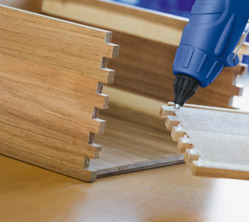
Wood generally bonds well with hot melt because its porous structure provides numerous anchoring points. Heavy furniture parts, wooden displays, cabinetry accessories, and transport packaging may still benefit from high strength hot glue sticks due to greater internal cohesion.
Higher-performance formulations help maintain bond stability during:
- Repeated handling
- Minor structural vibration
- Seasonal humidity variation
- Transportation movement
Glass and Ceramic Surfaces Challenge Many Adhesives
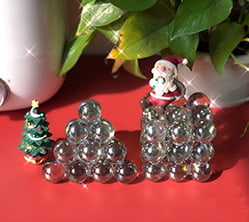
Glass and glazed ceramic offer almost no porosity. Molten adhesive cannot penetrate beneath the surface, making bond quality highly dependent upon adhesive chemistry.
Higher-strength formulations generally provide:
- Longer open time
- Improved peel resistance
- Greater flexibility after cooling
- Reduced cracking during impact
These characteristics are valuable in decorative products, lighting assemblies, and retail displays where appearance and stability are equally important.
Applications Exposed to Continuous Vibration
Surface type is only one consideration. Environmental conditions also influence adhesive durability.
Equipment experiencing repeated movement places constant stress on bonded joints.
Examples include:
- Industrial machinery covers
- Electrical cable routing
- Vehicle interior trim
- Portable electronic devices
Rigid adhesive may gradually develop cracks under cyclic loading, whereas higher-performance hot melt products typically retain a balance between bond strength and flexibility.
Typical Technical Characteristics
Different manufacturers publish varying specifications, yet industrial-grade glue sticks commonly fall within similar operating ranges.
| Parameter | Typical Range |
| Application Temperature | 170–200°C |
| Stick Diameter | 7 mm / 11 mm / 12 mm |
| Softening Point | 80–110°C |
| Initial Fixture Time | 20–60 seconds |
| Full Bond Development | Approximately 1 hour |
Several technical data sheets note that hot melt joints achieve only part of their ultimate strength shortly after application, while additional bond development continues during cooling.
Surface Preparation Still Matters
Even premium adhesive cannot compensate for contamination.
Reliable bonding begins with clean substrates.
- Remove oil and grease
- Eliminate loose dust
- Keep surfaces dry
- Allow proper application temperature
- Apply consistent pressure during assembly
Small preparation steps often contribute just as much to bond reliability as adhesive grade itself.
Bond strength depends on matching adhesive performance with substrate characteristics rather than relying solely on higher temperature or greater glue volume. Metals, engineering plastics, glass, ceramics, and assemblies exposed to vibration frequently benefit from stronger formulations because these materials demand higher cohesion, improved flexibility, or enhanced heat resistance.
Choosing high strength hot glue sticks for demanding surfaces helps create more dependable joints while reducing repair frequency and material waste. Evaluating surface energy, texture, operating environment, and mechanical stress together provides a more informed approach than focusing on adhesive strength alone.