

 English
 中文简体
中文简体
Author: Jie Chuang
Date: Jun 19, 2026
Does Hot Melt Glue Lose Strength in Summer Heat?
Summer heat often exposes a hidden limitation of bonding materials: thermal softening. Many users report that hot melt adhesive joints weaken, slip, or even detach during high-temperature seasons, especially in packaging, automotive interiors, and outdoor assembly environments. This behavior is closely tied to the thermoplastic nature of hot melt systems and the way temperature directly affects cohesion strength.
Heat-driven softening and bond instability
Hot melt adhesives are thermoplastic materials that regain a liquid or rubbery state once temperature approaches their softening range. Industry data shows most formulations begin to lose structural strength around 60°C–80°C, while some specialized grades may tolerate slightly higher service temperatures before deformation begins .
A key issue during summer exposure includes:
- Loss of internal cohesion as polymer chains gain mobility
- Reduced shear resistance under constant load
- Gradual creep deformation under stress even without direct failure
This means bonds may look intact visually while mechanically weakening under heat load.
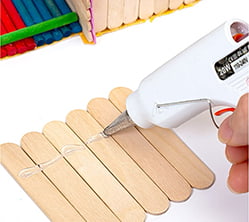


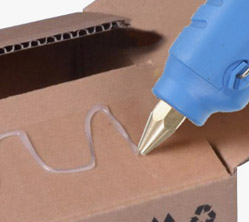
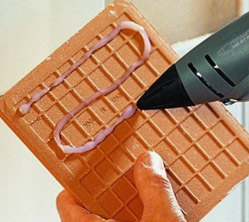
Granular Hot Melt Adhesive formulation behavior
Granular Hot Melt Adhesive is widely used in automated melting systems because it provides stable feeding, consistent viscosity control, and fast melt response. Its performance still depends heavily on base polymer type, tackifier ratio, and softening point selection.
Typical industrial processing ranges:
- Application temperature: 140°C–180°C
- Melt viscosity range: 1–30 Pa·s depending on formulation
- Softening point: usually 65°C–90°C depending on resin system
- Service temperature resistance: commonly 35°C–70°C for standard grades
Even though the adhesive is applied at high temperature, final bond strength is governed by its re-softening threshold during service use.
Why summer heat triggers bond failure
High ambient temperatures do not need to fully melt adhesive to cause failure. Instead, they gradually reduce mechanical integrity.
Main failure mechanisms include:
- Creep under load
Continuous stress causes slow deformation once the adhesive becomes rubbery. - Surface weakening at interfaces
Heat reduces interfacial adhesion strength, especially on low-energy plastics. - Thermal cycling stress
Repeated day–night temperature swings expand and contract bonded materials, weakening the bond line. - Reduced crystallinity stability
Some hot melt polymers lose structural rigidity as crystalline regions soften.
These effects combine to create the common complaint: “bond is fine in winter but fails in summer.”
Performance differences among hot melt types
Not all hot melt adhesives behave the same under heat stress. Performance varies significantly based on polymer chemistry:
- EVA-based systems: cost-effective but lower heat resistance
- Polyolefin hot melts: improved temperature stability, often up to ~100°C in optimized grades
- Polyamide hot melts: stronger thermal endurance, suitable for demanding applications
- Reactive PUR hot melts: higher final heat resistance due to chemical crosslinking
Granular formats can be formulated across these chemistries, allowing manufacturers to tune heat resistance for seasonal or regional environments.
Engineering strategies to improve summer stability
Improving high-temperature bond reliability is not only about changing adhesive type. System-level optimization is equally important:
- Increase softening point selection by 10–20°C above expected ambient peaks
- Reduce adhesive layer thickness to limit internal stress accumulation
- Improve substrate surface energy through cleaning or treatment
- Control application temperature consistency to avoid thermal degradation
- Design joints to reduce peel stress and favor shear loading
Thermal stability also depends on avoiding overheating during melting, since excessive heat can degrade polymer chains and reduce cohesive strength over time .
Practical implications for industrial users
Seasonal bond failure is most visible in:
- Carton sealing and packaging lines
- Automotive interior trim assembly
- Furniture edge banding and lamination
- Electronic component fixation
In these environments, temperature fluctuations can directly affect production reliability and product durability. Granular Hot Melt Adhesive systems offer flexibility in formulation, but correct grade selection remains critical for consistent summer performance.
Hot melt adhesives do not simply “fail” in summer, but they do lose mechanical strength as temperatures approach their softening range. Granular Hot Melt Adhesive systems are especially sensitive to formulation design, service temperature limits, and application conditions. Understanding thermal behavior helps reduce seasonal bond failure and ensures stable performance even under high ambient heat conditions.