

 English
 中文简体
中文简体
Author: Jie Chuang
Date: Aug 19, 2026
Beyond Fast Bonding: What Makes PUR Adhesives Keep Curing
Fast handling is one of the reasons polyurethane reactive hot melt adhesives have become useful across furniture, automotive interiors, textiles, construction components, and industrial assembly. A freshly applied adhesive can cool quickly, hold parts together, and allow production to continue without a long waiting period. Yet the bonding process does not end once the molten adhesive becomes solid.
The distinctive feature of polyurethane pur hot melt adhesives is their ability to continue reacting with moisture after the initial hot-melt stage. This creates a second curing phase that gradually changes the adhesive from a thermoplastic-like molten material into a crosslinked polymer network. The result is a bond that can continue gaining mechanical and thermal performance for hours or even several days.
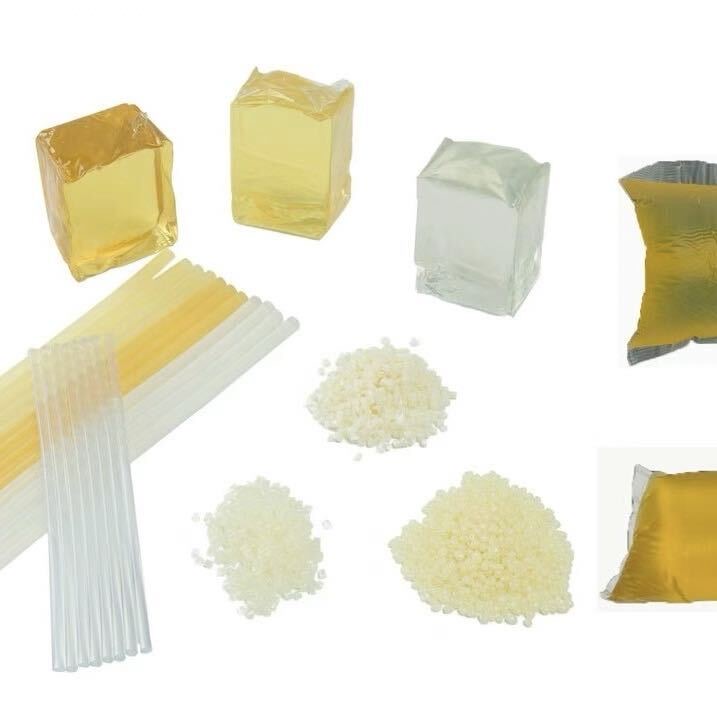
1. PUR Adhesives Use a Two-Stage Bonding Process
A conventional hot melt adhesive mainly depends on cooling and solidification. PUR hot melt technology adds a chemical curing mechanism to that physical setting process.
- Stage one: the adhesive is heated until it reaches its application viscosity.
- Stage two: the molten adhesive wets the substrates and provides initial tack.
- Stage three: cooling creates rapid green strength for handling and positioning.
- Stage four: atmospheric moisture reacts with remaining isocyanate groups.
- Stage five: chemical crosslinking continues until the cured adhesive develops its final properties.
3M describes PUR adhesives as combining hot-melt application speed with structural adhesive behavior. The company notes that initial holding strength comes from cooling, while moisture curing continues over roughly 24–48 hours for its PUR adhesive range. Actual curing time varies according to formulation, bond thickness, humidity, temperature, and substrate conditions.
2. Free NCO Groups Keep the Reaction Moving
The chemistry behind continued curing is closely associated with free isocyanate, commonly represented as NCO groups. A reactive polyurethane hot melt contains polyurethane prepolymer chains with residual NCO functionality.
After application, moisture from the surrounding environment can diffuse into the adhesive layer. Water reacts with the isocyanate groups and creates intermediate reaction products. The process ultimately contributes to polyurea formation and additional crosslinking within the polymer structure.
This explains why the adhesive can feel solid relatively soon after application while still undergoing chemical changes internally. The surface may provide enough strength for handling, but the polymer network has not necessarily reached its final state.
Why NCO Content Matters
NCO content is an important formulation parameter because it represents the remaining reactive groups available for moisture curing. A patent describing moisture-curable polyurethane hot melts reports free NCO levels around 0.5–3 g per 100 g of adhesive in certain formulations, while the appropriate level depends on the desired curing behavior and formulation chemistry.
Higher reactive-group availability does not automatically mean a better adhesive. Formulators must balance curing speed, viscosity, open time, flexibility, storage stability, and final mechanical performance.
3. Moisture Has a Direct Role in Final Curing
PUR hot melt adhesives do not cure simply because they have cooled. Moisture must reach the reactive groups within the adhesive layer.
- Relative humidity: Higher moisture availability can accelerate the chemical reaction, while very dry conditions may slow curing.
- Bond thickness: A thin adhesive layer generally allows moisture to penetrate more easily than a thick layer.
- Temperature: Temperature affects reaction kinetics and moisture movement through the adhesive.
- Substrate characteristics: Porous materials can interact with moisture differently from dense plastics or metals.
Scientific research on moisture-curing reactive polyurethane hot melt films has examined the process through diffusion-reaction models. The research confirms that water movement through the adhesive and chemical reaction occur together rather than as completely separate events.
4. Open Time and Cure Time Are Different
A common misunderstanding is treating open time and final cure time as the same specification. They describe different parts of the bonding process.
| Parameter | What It Describes |
| Open time | Period available for assembly or positioning after application |
| Setting time | Time required to develop sufficient initial holding strength |
| Green strength | Early bond strength before complete chemical curing |
| Final cure time | Period required for the moisture-driven crosslinking process to approach its specified final performance |
Commercial PUR products demonstrate how widely these values can vary. One Henkel PUR formulation has a very short open time and a melting temperature around 65°C, while another formulation is designed with a longer open time for assembly adjustment.
A Henkel technical data sheet for TECHNOMELT PUR 9622-02 lists a softening point of about 64°C, viscosity of 30–60 Pa·s at 130°C, and a stated final-strength curing period of approximately 2–5 days. These figures illustrate why application characteristics and final curing characteristics should be evaluated separately.
5. Adhesive Thickness Can Change the Curing Profile
Bond-line thickness has a direct connection with moisture diffusion. Moisture generally enters from exposed surfaces and gradually moves into the adhesive layer. A thicker layer therefore presents a longer diffusion path.
This factor becomes particularly relevant during lamination, panel bonding, and applications requiring a controlled adhesive film thickness. A process may achieve rapid surface setting while deeper material continues curing.
Research on a 2.0 mm HMPUR film specifically evaluated moisture diffusion and reaction behavior at different temperatures, demonstrating the importance of diffusion depth in understanding the curing process.
6. Formulation Controls More Than Just Bond Strength
A PUR formulation is a balance of several components rather than a single polymer ingredient. Polyols, polyisocyanates, catalysts, stabilizers, and other formulation elements can influence processing and curing behavior.
- Polyol structure influences flexibility, crystallinity, softening behavior, and mechanical characteristics.
- Isocyanate chemistry affects reactive functionality and crosslink development.
- Catalysts can modify the rate of moisture-related chemical reactions.
- Molecular weight influences melt viscosity and initial physical strength.
- Additives can be used to adjust stability, application behavior, color, and other performance characteristics.
Patent examples show that moisture-curable polyurethane hot melts can be formulated from combinations of polyisocyanates, polyalkylene glycols, polyester glycols, resins, and stabilizers.
7. Application Temperature Affects Processing Behavior
PUR hot melt adhesives must be heated sufficiently to achieve suitable flow and substrate wetting. The exact application temperature depends on the formulation and application equipment.
Commercial products can operate across different temperature ranges. One Henkel formulation specifies approximately 121–135°C, while a Sika PUR hot melt product lists an application range of approximately 100–160°C.
Excessive heating is also undesirable. Reactive polyurethane materials can gradually deteriorate under unsuitable thermal exposure, especially during prolonged residence in heated equipment. Application equipment therefore needs controlled temperature management, appropriate hoses, and suitable dispensing components.
8. Equipment Design Can Protect the Reactive Adhesive
The same moisture that helps the adhesive cure after application can become a problem inside the storage or melting system. Premature exposure to humidity can increase viscosity, create gel particles, or initiate unwanted curing before application.
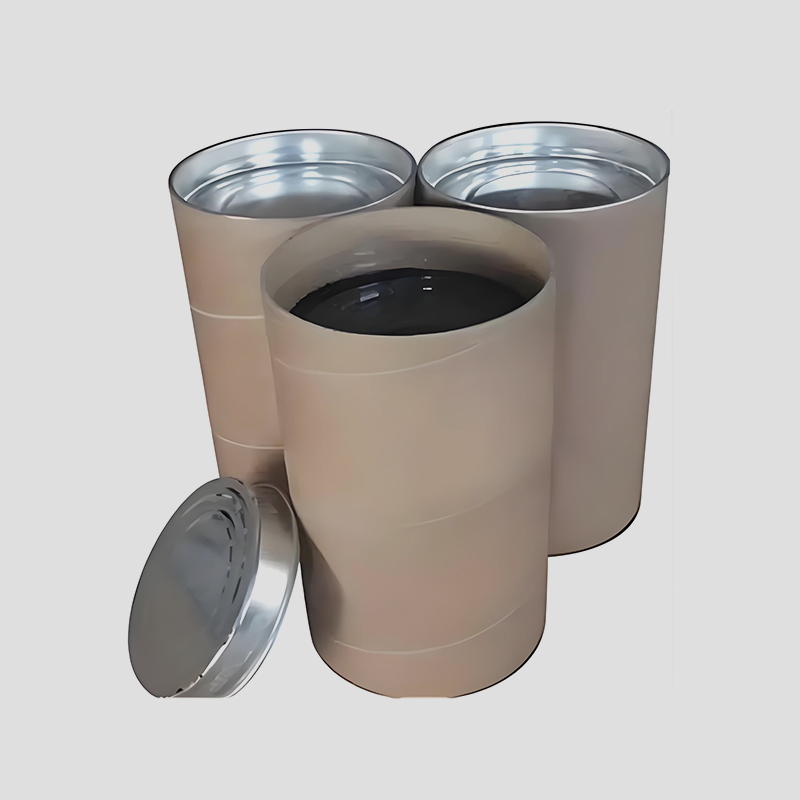
Reactive PUR systems commonly use sealed packaging and moisture-controlled equipment. Technical guidance for PUR hot melts can include nitrogen or dry-air protection around molten adhesive to reduce premature reaction.
- Use sealed containers suitable for moisture-sensitive materials.
- Minimize unnecessary exposure to ambient humidity.
- Maintain the recommended melting temperature.
- Avoid excessive residence time inside heated equipment.
- Use compatible hoses, nozzles, tanks, and cleaning procedures.
9. Why Final Strength Can Continue Rising After Assembly
The difference between green strength and final strength explains much of the value of PUR technology. Cooling can provide enough early holding force for production handling, but the moisture-curing reaction continues to build a crosslinked structure.
Henkel's TECHNOMELT PUR 9622-02, for example, is described as developing chemical crosslinking over several days and providing heat resistance and low-temperature flexibility after curing.
Another technical data sheet reports a PUR hot melt with a curing time of 3–7 days and a viscosity range of 7,000–11,000 cP at 110°C. Such specifications show why a production engineer should consider both application behavior and post-application curing requirements.
10. Practical Factors That Influence Cure Performance
Stable curing depends on more than the adhesive formulation itself. Production conditions should be evaluated as a complete system.
- Control adhesive temperature according to the manufacturer's recommended range.
- Maintain suitable humidity around the bonding area to support moisture curing.
- Keep the adhesive layer consistent to reduce differences in curing depth.
- Allow adequate post-assembly time before exposing the finished component to demanding loads.
- Protect unused adhesive from moisture during storage and processing.
- Match viscosity and open time with the dispensing method and assembly speed.
11. Where Continued Curing Adds Practical Value
The moisture-curing mechanism makes PUR hot melts useful for applications requiring both rapid handling and durable long-term bonding. Common areas include furniture edge bonding, textile lamination, automotive interior assembly, architectural panels, wood products, and selected plastic bonding applications.
Automotive interior applications provide a useful example. PUR products are used for components such as instrument panels, door panels, armrests, and center consoles, where dimensional stability, heat resistance, flexibility, and durable adhesion can all matter.
For textile lamination, the adhesive may need sufficient open time for accurate positioning while also developing resistance to washing, heat, and repeated flexing after curing. Commercial technical data show that different PUR formulations can be designed around substantially different open times and curing profiles.
12. What Buyers Should Examine Beyond Initial Tack
Initial tack is easy to notice during production, but it should not be the only evaluation point. A complete PUR adhesive assessment should cover the entire bonding cycle.
- Application temperature
- Melt viscosity
- Open time
- Setting time
- Green strength
- NCO content or reactive-group characteristics
- Curing time under defined temperature and humidity
- Final tensile or lap-shear strength
- Temperature and water resistance
- Recommended storage conditions and shelf life
A technical data sheet should always be used to interpret these values because test methods, substrates, film thickness, humidity, and curing conditions can vary between products.
Fast Handling Is Only the Beginning
The continuing cure of PUR hot melt adhesive comes from its reactive polyurethane chemistry. Cooling provides the rapid physical setting expected from a hot melt, while ambient moisture activates the remaining reactive groups and drives progressive chemical crosslinking. This two-stage mechanism explains how a material can be ready for handling shortly after application yet continue developing its final properties over a much longer period.
For manufacturers and process engineers, understanding this distinction can make adhesive selection and production control much more predictable. Application temperature, viscosity, open time, humidity, bond-line thickness, NCO functionality, and post-assembly conditions all interact with the curing process. A properly engineered PUR system therefore is not simply about bonding quickly—it is about controlling the transition from rapid assembly to durable long-term performance.